

Żerca
A 2–4 player tactical card game forged in Slavic myth, adapted from Franciszek Piątkowski's Powiernik novels. Serve the old gods, complete sacred Tasks, and outwit your rivals for their Faith. Banish the fallen to Nawia — then drag them back. Online ranked multiplayer.
Does this feel indie?
Vote based on whether this game feels indie to you. You can change your vote at any time. Results earn an IGF score after 10 accepted votes.| ContextThe evidence factors used to assess whether this game belongs on IndieGame.Fan. | Status | Notes Latest Contributor: IGF TeamEdit notes |
|---|---|---|
Media
5 itemsAbout the Game
A thousand years ago the gods locked themselves out
Perun, Weles and the rest sealed their power into idols. Small things. Portable. As it turned out, easy to lose.
When the last of them went missing, the road into Jawia closed behind it, and the gods have spent the millennium since on the far side of a door they can't open, watching a world that stopped needing them. No offerings. No fires. Nobody left who remembered how to ask.
Then Marek Lichocki crossed over — the first in a thousand years — and started looking for the idols.
He isn't the only one looking. Every tribe kept a Godny, its worthy one. The tribes became provinces and the Godni are still out there, all of them chasing the same lost gods, and none of them chasing them for quite the same reason.
Adapted from the Powiernik novels
Żerca takes place in the world of Franciszek M. Piątkowski's Powiernik novels: urban slavic fantasy, built on a Slavic cosmology that runs on three worlds — Jawia for the living, Nawia for the dead, and the gods shut out of both. Lichocki is the powiernik of the title. Several books in, the setting has its own history, its own rules and its own body count. We're building inside it.
Rusałki, czorty, skrzaty, żywiołaki — and every one of them made out of photographs. Real faces, real places, worked over until the myth shows through. If these things are still around, living under the asphalt and the tram lines, a camera is what would catch them.
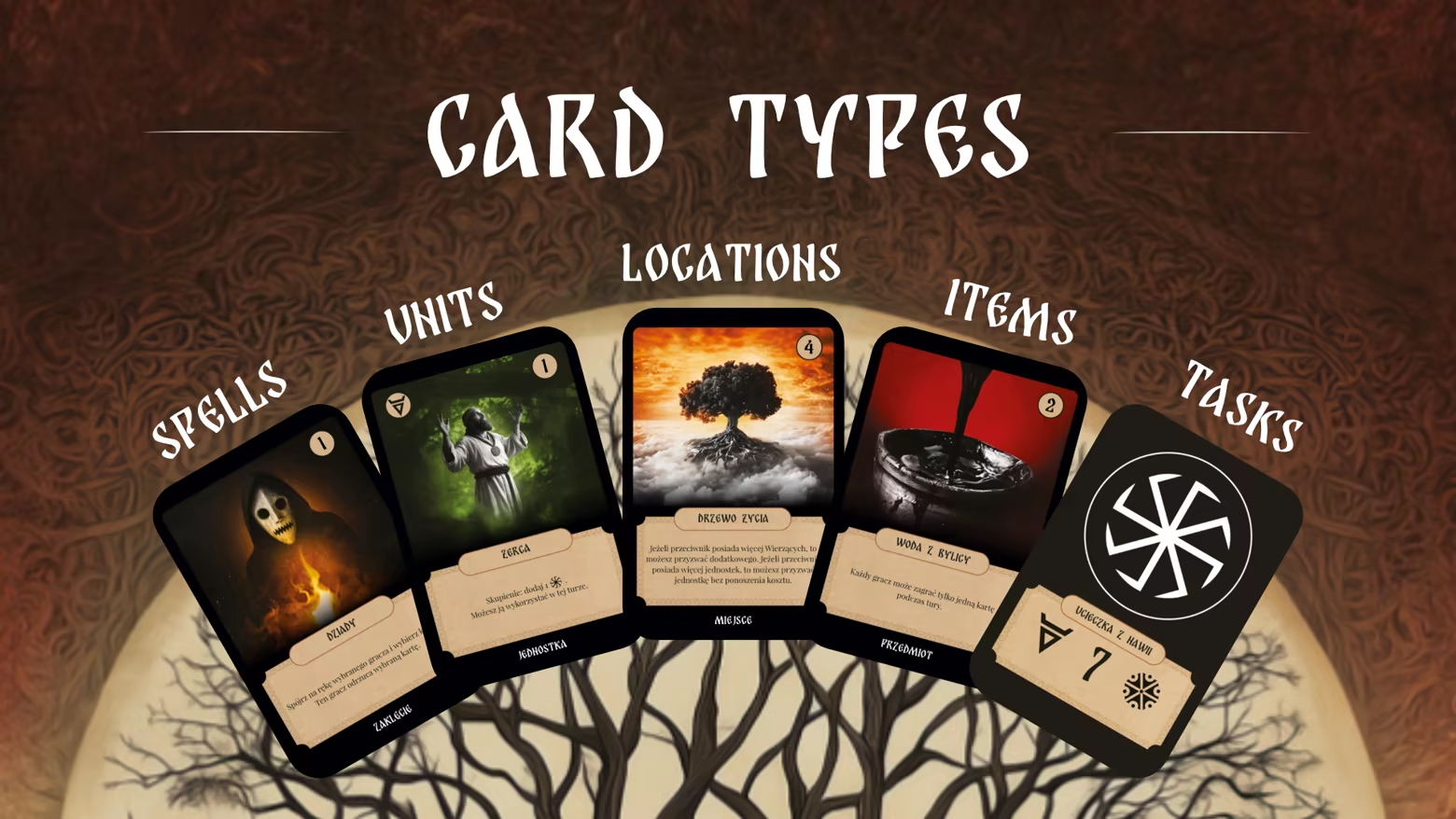
Faith is the only resource
You spend Faith to summon beings, equip them, and cast. That part will feel familiar. What's different is what you spend it toward: Tasks, the deeds the gods actually want done. Send units to work on a Task, hold it against the people trying to take it off you, and you score. Controlling the board is a means here. It isn't the win condition.
Four at the table
Most digital card games put you opposite exactly one opponent. Żerca seats up to four. Nobody is formally on a team, but whoever's ahead tends to discover that everyone else has quietly started cooperating. Reading the table matters as much as reading your hand.
Physical and Spiritual
Everything you summon has Physical strength (Perun's domain: thunder, war) and Spiritual strength (Weles': the dead, the underworld). Add them together and you have the unit's life. Tasks ask for one kind or the other, so a monster that's terrifying in a straight fight can be useless for the thing you actually need done.
Nawia has a door on both sides
Units that die go to Nawia, and Nawia gives things back. Sacrifice something living to power up something stronger. Pull an old unit out for one more fight. Mill an opponent's deck and help yourself to whatever falls through. Decks built for the second half of the game beat decks built for the first more often than you'd expect.
The practical stuff
Ranked online multiplayer.
Story Mode set in the Powiernik world.
Cross-platform — your account and collection follow you.
No pay-to-win. Nothing you can buy changes what happens in a match.
20–30 minute matches.