

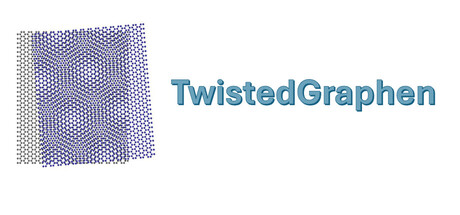
TwistedGraphen
A strategy board game for the device and the player. The board has 6 side hexagons, and 24 hexagonal corners, 12 to the device and 12 to the player. In turn, the parties place 24 colorful pawns on the 24 corners without repeating a color in the same side hexagon.
Does this feel indie?
Vote based on whether this game feels indie to you. You can change your vote at any time. Results earn an IGF score after 10 accepted votes.| ContextThe evidence factors used to assess whether this game belongs on IndieGame.Fan. | Status | Notes Latest Contributor: IGF TeamEdit notes |
|---|---|---|
Media
6 itemsAbout the Game
The game board of TwistedGraphen includes 6 hexagons that encircle a central hexagon. A white or a black circular site is present in each hexagonal corner. A colorful pawn bank including 24 pawns is available before the game starts. While playing, the user competes with the computerized device. Hereafter, both the device and the users are called players. In turn, a player takes a colorful pawn from the bank and places it on a site. The user places a pawn only in an available white site. The device places a pawn only in an available black site. No colorful pawn may be placed in a site of a hexagon already having that color in another corner site. Whenever a player has no more possible moves, they declare "Out of moves". In each game, there is a starting player (hereafter the starter) and a responding player (hereafter the responder). In case the responder declares "out of moves", the starter wins. In case the starter declares "out of moves", the responder has a chance to place a pawn in a site. If the responder places a pawn on a site, the responder wins. If the responder declares "out of moves", the result is a Tie. There are two possible board games, one of which is selected randomly in each game. There are 7 sets of 24 colorful pawns, one of which is selected in each game. The scores from a series of games are accumulated and presented to the user once a game ends. The user may identify himself/herself by a name. The scores and the name may be shared at the user's will.