

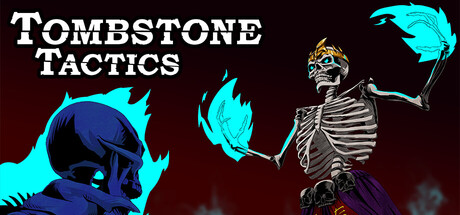
Tombstone Tactics
Tombstone Tactics is a roguelike autobattler played from the wrong side of the crypt. Raise skeletons, arm them with the gear of fallen heroes, and sacrifice the weak to reshape your forces. Build the right army to keep your Lich alive through the run.
Does this feel indie?
Vote based on whether this game feels indie to you. You can change your vote at any time. Results earn an IGF score after 10 accepted votes.| ContextThe evidence factors used to assess whether this game belongs on IndieGame.Fan. | Status | Notes Latest Contributor: IGF TeamEdit notes |
|---|---|---|
Media
5 itemsAbout the Game
Command Death Itself
In Tombstone Tactics, you rule as an immortal Lich whose power is measured not by armies kept alive, but by how effectively you use what dies. Every battle is a test of preparation, sacrifice, and restraint, where victory is temporary and loss is inevitable—but never wasted.
Strategy Built From Remains
You do not recruit units. You assemble them.
Before each battle, you construct undead creatures from scavenged components:
Souls define a unit’s core identity and base strength
Abilities determine how it acts in combat
Passives or stat modifications shape its role and behavior
Each unit has strict slots, forcing meaningful tradeoffs. No creation can do everything, and no build lasts forever.
Watch the Consequences Unfold
Once combat begins, battles resolve automatically through clear, deterministic rules. There is no micromanagement and no reflex play—the outcome reflects the decisions you made beforehand.
You may intervene sparingly, spending precious souls to invoke powerful necromantic commands, but every such choice weakens your future forces. Control is absolute, but never free.
Loss Is a Resource
Failure does not end a run immediately. When enemies survive a battle, their presence damages your Lich’s remaining control, represented by a shared health pool that persists across encounters.
Enemies obey the same rules as your creations. When they fall, they leave behind the souls and components they were built from. What defeats you today may become the foundation of tomorrow’s solution.
Adapt or Decay
There are no permanent items and no perfect strategies. Power is temporary, resources are limited, and every encounter forces new compromises. Mastery comes not from optimization, but from learning when to sacrifice, when to intervene, and when to let things die.
Core Features
Modular Unit Construction
Build undead units from interchangeable parts with strict slot limits and clear roles.
Auto-Resolved Tactical Combat
Battles play out automatically, emphasizing planning, positioning, and intent.
Meaningful Resource Sacrifice
Spend souls to influence combat, knowing it will cost you later.
Run-Level Stakes
A persistent Lich health pool ensures every loss matters without ending the game outright.
Enemies as Materials
Harvest fallen foes to fuel future creations and adapt to escalating threats.
Rule the Aftermath
Tombstone Tactics is a game about control without certainty, power without permanence, and strategy forged from failure. You are not trying to preserve an army—you are trying to outthink death itself.
How much are you willing to lose to survive the next battle?