

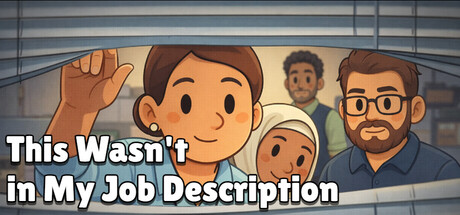
This Wasn’t In My Job Description
Managing an office, making tough choices, and keeping your little team happy over the course of a year. A cozy management simulation where every decision has lasting consequences.
Does this feel indie?
Vote based on whether this game feels indie to you. You can change your vote at any time. Results earn an IGF score after 10 accepted votes.| ContextThe evidence factors used to assess whether this game belongs on IndieGame.Fan. | Status | Notes Latest Contributor: IGF TeamEdit notes |
|---|---|---|
Media
8 itemsAbout the Game
Take charge of a small but chaotic office. Manage your team, deal with incoming requests, and try to keep the budget afloat throughout a single 52-week game cycle. The game progresses on a weekly basis, and the decisions you make each week have lasting consequences.
The tasks you encounter are randomly generated but not entirely out of your control. Each week brings different tasks and requests; solve them by assigning employees, spending the budget, using external resources, or postponing them. Each solution method has different effects on KPIs, the budget, employee statistics, and future events.
Employees have a detailed statistics system. Track values such as happiness, fatigue, productivity, and loyalty; while an overworked person becomes exhausted, a well-managed team becomes stronger in the long run. Employee personality traits and bonuses directly affect the success and cost of tasks.
Personal story and event systems come into play throughout the game. Story chains linked to employees branch out based on decisions made and lead to different outcomes. Some decisions return in the following weeks as new tasks, additional costs, or unexpected advantages.
Budget and revenue management are fundamental aspects of the game. Cover fixed expenses, control weekly spending, and evaluate sponsorship offers. Sponsors provide regular income but can only be held in limited numbers; sometimes you may need to give up an existing sponsor to accept a new offer.
Play at a relaxed pace, advance through the week whenever you want, and clearly observe the consequences of your decisions. The game offers a calm atmosphere while constantly encouraging strategic thinking.
At the end of 52 weeks, receive a detailed final report based on your office's performance. Your choices, the status of your employees, and your overall success level will be clearly visible in this report.