

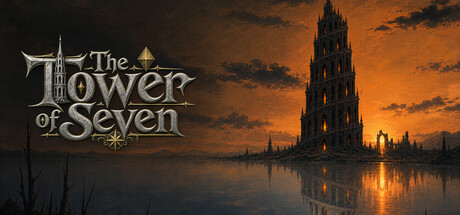
The Tower of Seven
The Tower of Seven is a board-game-inspired roguelike where cards, dice, and demon rules reshape every floor. Build a three-card chain, trigger upright or reversed effects, and rewrite the table as you climb toward fate.
Does this feel indie?
Vote based on whether this game feels indie to you. You can change your vote at any time. Results earn an IGF score after 10 accepted votes.| ContextThe evidence factors used to assess whether this game belongs on IndieGame.Fan. | Status | Notes Latest Contributor: IGF TeamEdit notes |
|---|---|---|
Media
6 itemsAbout the Game
The Tower of Seven is a board-game-inspired tower-climbing game built around cards, dice, and lightweight deckbuilding.
On each floor, choose three build cards from a five-card hand. Use the first die, second die, and final die to trigger upright or reversed card effects, and make your final score exceed the demon score.
Demon cards constantly rewrite the rules. Every card choice, die roll, reward replacement, and card order decision can change the fate of the run.
The goal of each floor is simple:
make your final score higher than the demon score. But there is no single way to do it. You may rely on high-value bursts, or create an advantage through card order, affinity, rerolls, swaps, copies, and weakening demon dice. A good build is not just about choosing strong cards. It is about understanding the relationship between the current dice, demon rules, and your three selected cards.
Every card has both an upright and a reversed effect.
Low values usually trigger upright effects, high values usually trigger reversed effects, and neutral results may offer additional choices. Dice are not just random numbers. They determine card faces, direction, timing, and risk. You must decide: which card should receive this die? Where should this card be placed? Should you play safely, or gamble for a higher ceiling?
Demon cards create new restrictions on every floor.
They may strengthen demon dice, change trigger directions, force the final die to be revealed early, or shut down familiar routes. Players must find openings within changing rules instead of repeating the same strategy every time.
Features
Lightweight deckbuilding: Choose three cards from a five-card hand each floor. Card order directly affects resolution.
Upright and reversed effects: The same card can offer different strategic value depending on the triggering die.
Dice-driven decisions: The first die, second die, and final die affect both values and available routes.
Rule-changing demons: Demon cards reshape each floor, forcing you to reassess your hand and risk.
Evolving tower runs: Replace cards after victories and reshape your build as the climb continues.
Traceable resolution logs: Every score change, reroll, swap, and failure reason is clearly shown.
Expandable card-effect system: Future updates will focus on new cards, new demons, and new build paths.