


The Box Project
A short first-person experimental game with comedy elements. You are given one simple task: supervise a box. Listen to a voice over the speakers, face a test built around attention and simple rules, and try not to prove that modern players can fail at anything.
Does this feel indie?
Vote based on whether this game feels indie to you. You can change your vote at any time. Results earn an IGF score after 10 accepted votes.| ContextThe evidence factors used to assess whether this game belongs on IndieGame.Fan. | Status | Notes Latest Contributor: IGF TeamEdit notes |
|---|---|---|
Media
6 itemsAbout the Game
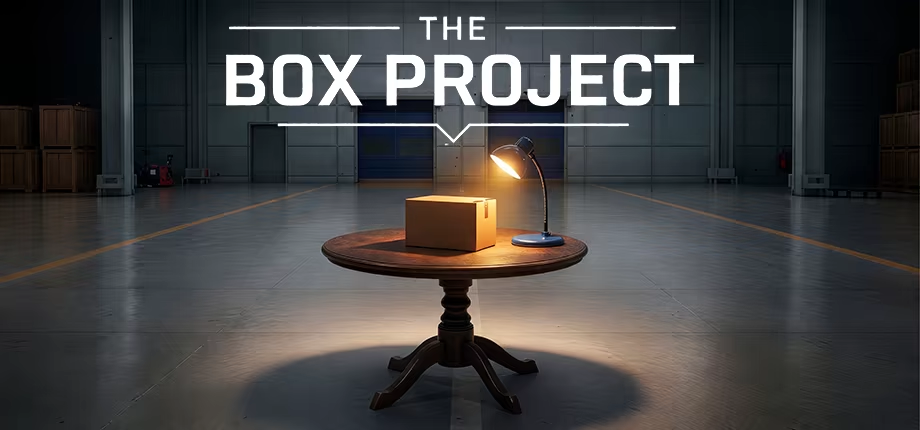 The Box Project is a short first-person experimental game with comedy elements.
You are placed in a room and given one extremely simple task: supervise a box.
A voice over the speakers is convinced that modern games have become too easy, too forgiving, and too afraid to frustrate the player. To prove his point, he has designed a test that should be impossible to lose.
Just one scenario, one box, one simple objective, and a voice that really wants you to prove him right.
The game is designed to be played in one sitting, with minimal controls, quick failures, and a sequence of strange situations built around attention, rules, and the pressure of being watched by someone who expects you to mess up.
As the test continues, the situation changes, the voice reacts, and the task becomes harder to trust than it first appeared.