

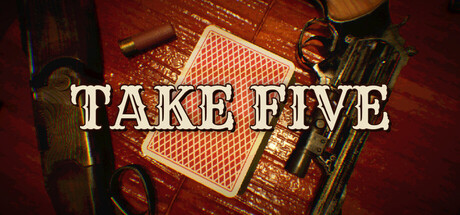
Take Five
Your hands are steady. Theirs might not be. Around a worn wooden table, strangers play for the only thing that matters, another round of breathing. Trust no smile, believe no bluff. The tension builds card by card until someone breaks. Will it be you? A brutal game of nerves for 2–4 players.
Does this feel indie?
Vote based on whether this game feels indie to you. You can change your vote at any time. Results earn an IGF score after 10 accepted votes.| ContextThe evidence factors used to assess whether this game belongs on IndieGame.Fan. | Status | Notes Latest Contributor: IGF TeamEdit notes |
|---|---|---|
Media
5 itemsAbout the Game
Your hands are steady. Theirs might not be.
Around a worn wooden table, strangers sit down to play for the only thing that matters — another round of breathing. There's no prize pool here. No consolation. Every card you touch, you're betting the one thing you can't buy back.
Trust no smile. Believe no bluff. In Take Five, the lies start before a single card hits the table — and they don't stop until someone's out. The tension builds card by card until someone finally breaks.
Will it be you?
How It Works
Take Five is a last-one-standing card game for 2–4 players. Simple to learn, merciless in practice.
First, the cards find their owners — and so do the lies.
One player sees both cards. The other sees only theirs. When cards are dealt out, one player looks at two and has to choose which goes where. The other player sees only the card they're handed — and can lie about it or tell the truth.
It's a guess about where the better card is. Believe the bluff and you hand your opponent the stronger number. Call it right and you take the advantage before the round even begins. Every card is negotiated through a lie you're not sure is a lie.
Then, everyone commits.
Highest number takes the shot. Once cards are down, the strongest number earns the right to fire — and can point that shot at anyone at the table. Play weak and you're at someone else's mercy. Play strong and every eye is on you.
Get shot, stay silent. A player who's been shot can't shoot back — even if their card would have let them. Land the first shot on the right person and you strip their power before they ever use it.
But don't be too eager. Shooting too early has a cost: pull the trigger before the moment is right and the shot turns on you. The one who rushes doesn't win the round — they end their own.
Special cards rewrite everything. Scattered through the deck are cards that bend the flow — protecting a shooter, forcing a hand, redirecting a shot, or flipping who holds the power entirely. One special card in the right round can undo everything the numbers said.
Survive the exchange and the deck comes back around. Get shot with no answer, and the table has one fewer player.
A Game of Nerve, Not Luck
Anyone can draw a high card — if they can tell when they're being lied to. Surviving the table is about reading the person, not the deck. Trust the wrong smile and you're handed a losing hand before you play. Fire too soon and you're gone by your own trigger. Every round is a small negotiation with fear — yours and theirs — and the players who last longest aren't the lucky ones. They're the ones who know when now is a trap.
Read the Room, or Become It
2–4 players locked in a slow-burning duel of nerve, timing, and deception
Bluff-driven dealing — one player picks, the other lies, and both are guessing where the better card really is
Simultaneous reveal — everyone commits at once, and no one's sure who's holding the highest number
Special cards that protect, punish, redirect, or overturn the power of the round
A shot fired first is a shot no one can return — but rush it and you punish yourself
Fast, brutal rounds where a single misread ends someone's game