


Subway Builder
Subway Builder is a hyperrealistic transit simulation game. Build a new subway system from the ground up while dealing with real-world constraints and costs. Craft the subway system your city deserves.
Does this feel indie?
Vote based on whether this game feels indie to you. You can change your vote at any time. Results earn an IGF score after 10 accepted votes.| ContextThe evidence factors used to assess whether this game belongs on IndieGame.Fan. | Status | Notes Latest Contributor: IGF TeamEdit notes |
|---|---|---|
Updated: Jul 14, 2026Developer scaleThe operating scale of the game's developer. | ||
Updated: Jul 14, 2026Publisher scaleThe operating scale of the game's publisher. | A separate publisher is listed without a proven bounded regional or service-only role. | |
Updated: Jul 14, 2026Creative controlWho appears to retain creative control of the game. | ||
Updated: Jul 14, 2026Release statusWhether and how the game has been released. |
Media
9 itemsAbout the Game
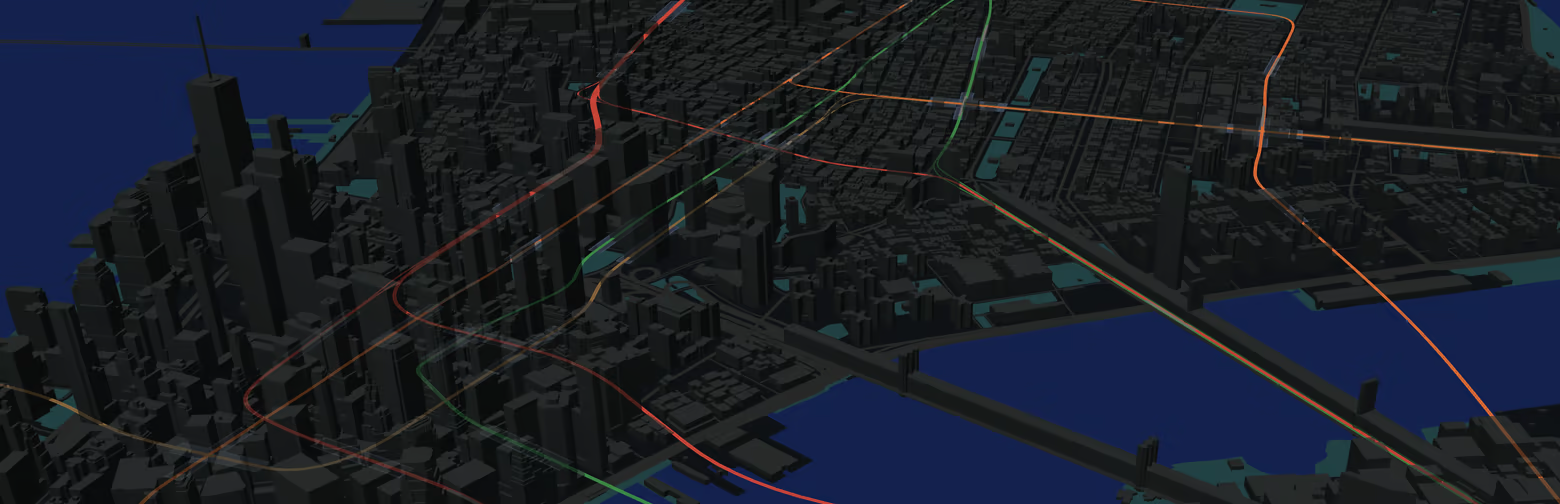
Subway Builder is a hyperrealistic transit simulation game built using live data from US and UK cities.
Real-World Passenger Simulation
Millions of commuters are generated from Census and Redistricter data and simulated using the same pathfinding algorithms you use on your phone. Your job is to design a route network that gets the most people to their destination as fast as possible. Juggle station placement, transfer dynamics, and train frequency to maximize ridership.
In-Depth Analysis
Explore how individual commuters weigh tradeoffs between wait times, transfers, income distribution, delays, and more, to pick their commute. Understand which routes, stations, and trains your commuters take and use that information to optimize your network.
You must also find the right balance between cost and time using this analysis. Too many trains on a line or an overcrowded station may cause delays or disruptions.
Authentic Data
The US and UK census records home and workplace locations. The game generates millions of commuters with homes from that and then uses a distance-based gravity model to assign them all workplaces. They're also assigned times to leave to/from work in a distribution similar to real life. Please note that a broadband connection is required to maintain the real data used by the game.
This decision is then made based on how long each commute method takes, how much it costs, and the value of their time (different commuters can have different incomes).
If they decide to take the subway you can follow their commute (and thousands of others simultaneously) as they get to work. If a train is delayed or cancelled, it will affect their commute and future commuters will take that into account.
College and airport commuters are also simulated and they behave differently since they have different income distributions and commuting times. Federal data is used for college student counts and FAA data for airports.
Current cities in Subway Builder include: Atlanta, Austin, Baltimore, Boston, Charlotte, Chicago, Cincinnati, Cleveland, Columbus, Dallas, Denver, Detroit, Honolulu, Houston, Indianapolis, Miami, Milwaukee, Minneapolis, New York, Philadelphia, Phoenix, Pittsburgh, Portland, Salt Lake City, San Diego, San Francisco, Seattle, St Louis, and Washington in the US. Birmingham, Liverpool, London, Manchester, and Newcastle are cities available in the UK.