

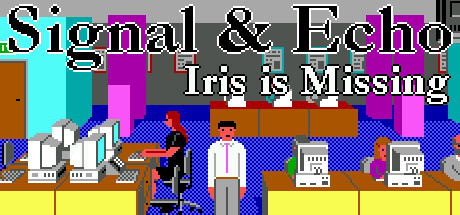
Signal & Echo: Iris is Missing (demo)
A point-and-click adventure with innovative detective mechanics. Help Ollie, a fledgling reporter on his first day at the Signal & Echo newspaper, to solve the mystery behind a schoolgirl's disappearance. Developed by an ex-journalist.
Developer
Publisher
Release
November 2, 2022
3 years and 274 days ago
Steam Reviews
Very Positive57 reviews94.7%
Does this feel indie?
Vote based on whether this game feels indie to you. You can change your vote at any time. Results earn an IGF score after 10 accepted votes.No votes yet
Game contextLatest: IGF Team
| ContextThe evidence factors used to assess whether this game belongs on IndieGame.Fan. | Status | Notes Latest Contributor: IGF TeamEdit notes |
|---|---|---|
Updated: Jul 14, 2026Developer scaleThe operating scale of the game's developer. | ||
Updated: Jul 14, 2026Publisher scaleThe operating scale of the game's publisher. | ||
Updated: Jul 14, 2026Publisher statusHow the game's publishing relationship is classified. | ||
Updated: Jul 14, 2026Creative controlWho appears to retain creative control of the game. | ||
Updated: Jul 14, 2026Release statusWhether and how the game has been released. |
Media
9 itemsAbout the Game
Just gimme the gist!
Informed by the developer’s past career in journalism, you play as Ollie, a wannabe reporter on his first day of work experience at the Signal & Echo newspaper, in the fictional town of Runeton, England.
Ollie thought he’d be chained to his desk all day, rewriting press releases. Instead, he’s been given a real assignment: find out what happened to missing schoolgirl Iris Wood.
Using a unique text parser system, alongside traditional point-and-click mechanics, help Ollie impress his colleagues and break the story wide open!
What’s this about a ‘unique’ text parser?
Alongside the verb interactions and inventory puzzles found in many traditional adventure games, Signal and Echo: Iris is Missing uses an innovative text parser system—for conversations, searching the newspaper’s computer archive, and finding new locations on your map.
The system recognises any proper noun (i.e. capitalised noun, like John Smith, London, or The Beatles), so long as you’ve found it in-game. It also accepts the name of any hotspot, from any location, including inventory items.
This means you can ask anyone about any of these things. You'll need to take notes out in the real world and really think for yourself! (All the puzzles use real-world logic, as opposed to cartoon or moon logic.)
Informed by the developer’s past career in journalism, you play as Ollie, a wannabe reporter on his first day of work experience at the Signal & Echo newspaper, in the fictional town of Runeton, England.
Ollie thought he’d be chained to his desk all day, rewriting press releases. Instead, he’s been given a real assignment: find out what happened to missing schoolgirl Iris Wood.
Using a unique text parser system, alongside traditional point-and-click mechanics, help Ollie impress his colleagues and break the story wide open!
What’s this about a ‘unique’ text parser?
Alongside the verb interactions and inventory puzzles found in many traditional adventure games, Signal and Echo: Iris is Missing uses an innovative text parser system—for conversations, searching the newspaper’s computer archive, and finding new locations on your map.
The system recognises any proper noun (i.e. capitalised noun, like John Smith, London, or The Beatles), so long as you’ve found it in-game. It also accepts the name of any hotspot, from any location, including inventory items.
This means you can ask anyone about any of these things. You'll need to take notes out in the real world and really think for yourself! (All the puzzles use real-world logic, as opposed to cartoon or moon logic.)