

Robo Gauntlet
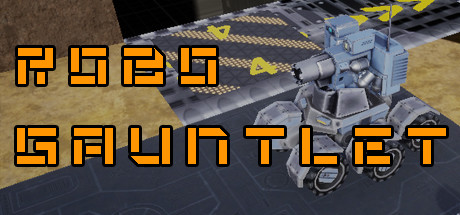
Robo Gauntlet is a chaotic robo programming rally game where you program robots then watch them perform the actions and cause mayhem on the way to the finish line!
Developer
Publisher
Release
December 15, 2020
5 years and 231 days ago
Steam Reviews
3 user reviews3 reviews100.0%
Does this feel indie?
Vote based on whether this game feels indie to you. You can change your vote at any time. Results earn an IGF score after 10 accepted votes.No votes yet
Game contextLatest: IGF Team
| ContextThe evidence factors used to assess whether this game belongs on IndieGame.Fan. | Status | Notes Latest Contributor: IGF TeamEdit notes |
|---|---|---|
Media
7 itemsAbout the Game
Robo Gauntlet is a chaotic strategy game where you input programming cards into your robot's command-line registry at the same time as other players and then lean back and watch as the robots perform the actions and cause mayhem!
Players assume control of one of many robots in a hazardous testing facility filled with moving conveyor belts, laser beams, bottomless pits, and a variety of other obstacles. There will be two game mode types; coop and versus.
The goal in a game of versus is, apart from survival, to be the first to reach a predetermined number of checkpoints in the correct order. The real difficulty however is movement, which is accomplished with the randomly dealt programming cards.
The goal in a game of coop is to work together to reach a common goal, be it collecting or moving something, finishing a specific task, eliminating the baddies, or even fighting a boss.
The program cards specify movement, such as move one or more spaces forward, turn left or right, move back, or turn around. The cards have to be arranged by the player in the specific order they wish the cards to play out and the robot to move. Each player receives nine cards each turn. They use five of the cards to specify their robot's movement for the given turn, playing each card face down into one of five available "command-line registries". All robots move simultaneously, each player's robot performing each register in turn. Robot priority is resolved by where the robot closest to the transmitter goes first. A robot moving into an occupied space pushes the blocking robot, and any additional ones beyond that, into the next space providing that there is no wall or other immovable object in the way. When players' robots are damaged they receive virus and bug cards that dilute the draw pile. To get rid of these bugs the player needs to program the bug into a register to be able to discard it after played, effectively squashing the bug. Each player has a very limited amount of time to program their cards since as soon as the first player has programmed all five registries a timer is started. When the timer runs out the remaining players that haven't finished programming will get their unfinished programming scrambled. This combined with the unpredictability of the plans of the other players and the hazards of the facility often leads to one's robot moving in unexpected ways!
Players also have the option to upgrade their robots with weapons and device upgrades, which add to the carnage and mayhem. These upgrades can cause additional damage, allow robots to move differently like breaking normal movement rules, affect the movement of other robots, and disrupt opponents' plans in other ways.
The game realizes a reversal of the concept of computer simulation games: rather than computers simulating some real-world action, human players try to simulate the actions of a computer.
Players assume control of one of many robots in a hazardous testing facility filled with moving conveyor belts, laser beams, bottomless pits, and a variety of other obstacles. There will be two game mode types; coop and versus.
The goal in a game of versus is, apart from survival, to be the first to reach a predetermined number of checkpoints in the correct order. The real difficulty however is movement, which is accomplished with the randomly dealt programming cards.
The goal in a game of coop is to work together to reach a common goal, be it collecting or moving something, finishing a specific task, eliminating the baddies, or even fighting a boss.
The program cards specify movement, such as move one or more spaces forward, turn left or right, move back, or turn around. The cards have to be arranged by the player in the specific order they wish the cards to play out and the robot to move. Each player receives nine cards each turn. They use five of the cards to specify their robot's movement for the given turn, playing each card face down into one of five available "command-line registries". All robots move simultaneously, each player's robot performing each register in turn. Robot priority is resolved by where the robot closest to the transmitter goes first. A robot moving into an occupied space pushes the blocking robot, and any additional ones beyond that, into the next space providing that there is no wall or other immovable object in the way. When players' robots are damaged they receive virus and bug cards that dilute the draw pile. To get rid of these bugs the player needs to program the bug into a register to be able to discard it after played, effectively squashing the bug. Each player has a very limited amount of time to program their cards since as soon as the first player has programmed all five registries a timer is started. When the timer runs out the remaining players that haven't finished programming will get their unfinished programming scrambled. This combined with the unpredictability of the plans of the other players and the hazards of the facility often leads to one's robot moving in unexpected ways!
Players also have the option to upgrade their robots with weapons and device upgrades, which add to the carnage and mayhem. These upgrades can cause additional damage, allow robots to move differently like breaking normal movement rules, affect the movement of other robots, and disrupt opponents' plans in other ways.
The game realizes a reversal of the concept of computer simulation games: rather than computers simulating some real-world action, human players try to simulate the actions of a computer.