

Lode Builder
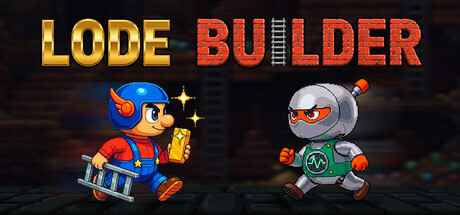
Lode Builder is the evolution of the classic Lode Runner. Collect all the gold using new tactical tools. Need to climb? Build a ladder. Pit ahead? Stretch a chain. Tired of Robots? Burn them ALL! Gather resources across the map and don't waste a single one.
Does this feel indie?
Vote based on whether this game feels indie to you. You can change your vote at any time. Results earn an IGF score after 10 accepted votes.| ContextThe evidence factors used to assess whether this game belongs on IndieGame.Fan. | Status | Notes Latest Contributor: IGF TeamEdit notes |
|---|---|---|
Media
16 itemsAbout the Game
About the Project in Short:
Lode Builder = Lode Runner + Building. New mechanics: ladder construction, chain stretching, and mass burn.
Campaigns: 150+ levels (3 themed campaigns blending arcade action and puzzles).
Unlimited Mode: IDDQD / IDKFA codes, invincibility, and infinite resources for free-form building.
Extra Challenges: robot invisibility, hidden resources.
Arcade Mode: fast-paced play with a random selection of 100+ straightforward levels (pure action with no complex puzzles).
Arcade Tournaments: compete with other players for the best monthly and yearly high scores.
Player Levels: easily browse custom maps and sort creators by their rating.
Level Editor: create your own levels and publish them for the entire community.
From the Author:
When I sat down to write the story for Lode Builder, a simple fairy tale kept coming to my mind. A tale of a rogue hero, crates of gold, evil guards, and a mining laser found in an abandoned laboratory. This went on for quite a while, but then I stopped…
My game was created based on the classic Lode Runner. This masterpiece took its rightful place in history long ago, without having any story at all. That is why I decided to simply write about how a legendary classic transformed into Lode Builder. And to explain why these two games, seemingly so similar on the surface, are so vastly different.
I added three new mechanics to the classic Lode Runner gameplay. Two free-building mechanics: ladders for vertical movement and chains for horizontal travel. Plus, the massive burn mechanic (BigFire) to obliterate robots and rapidly descend to greater depths.
These new mechanics are not available by default. Players can only unlock them by finding the necessary resources on the level. Resource limitation is a key element of the gameplay.
The very first playtests showed that the rules of the game had fundamentally changed. In the classic Lode Runner, level design was incredibly strict. A single extra or misplaced block would break the map, making it impossible to beat. Free building and mass burning completely shattered those limitations. As it turned out, with enough resources, you can beat any level, no matter how intricate.
Once the need for strictly calculated paths was gone, the visual design of the maps became much more free. This is how the final art style of Lode Builder gradually came to life: each level is a vibrant visual image where the main action unfolds.
Ultimately, Lode Builder turned out to be an entirely different beast. The free-building mechanics changed the gameplay so drastically that classic strategies became obsolete, giving way to fresh and unexpected solutions. Furthermore, using a 23×38 pixel canvas brought a brand new challenge of directly merging gameplay with the art of pixel art. As a result, the campaign maps turned out to be vibrant and memorable.