

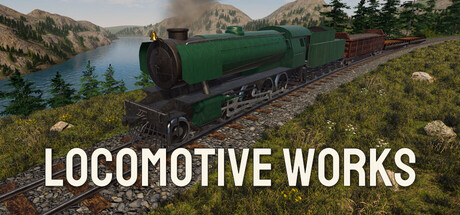
Locomotive Works
Build custom steam locomotives and deliver freight on a working railway. Your designs affect performance. Different jobs need different designs, and every choice has trade-offs. Balance power, size, range and cost to build anything from small yard shunters to heavy freight engines for steep climbs.
Does this feel indie?
Vote based on whether this game feels indie to you. You can change your vote at any time. Results earn an IGF score after 10 accepted votes.| ContextThe evidence factors used to assess whether this game belongs on IndieGame.Fan. | Status | Notes Latest Contributor: IGF TeamEdit notes |
|---|---|---|
Media
6 itemsAbout the Game
Design steam locomotives, haul freight on a working railroad, and find out if they can handle the job.
Build locomotives from components like boilers, cabs, and wheel arrangements. How you design your locomotives affects their speed, range, cost, pulling power, and how many wagons they can haul.
Earn money by delivering cargo and designing locomotives for customers.
Different jobs need different kinds of locomotive, and you can design them all: small locomotives for moving wagons around yards, powerful freight engines that can haul many wagons over long distances, or general workhorses that can handle the steepest mountain lines.
Run a Working Freight Railroad
Your railroad stretches from a busy port by the sea to logging sites and mines in the mountains, with factories in between. You need to keep them all supplied, while coal, timber and manufactured goods need to reach the port for export.
Keep the railroad running by managing pickups and deliveries, and by collecting and storing empty wagons.
Build and Arrange Your Trains
You can build and arrange trains yourself, moving wagons between tracks and connecting them in the order you need.
Or start with a train already assembled and get straight to driving and making deliveries.
Choose the Right Engine for the Route
The lowland areas can support fast trains, but the mountains require specialised locomotives.
Decide whether you want to build more powerful engines, or split the load before you reach the steepest mountain climbs. Sometimes the best answer is not a bigger locomotive, but fewer wagons, a second trip, or a different engine for that part of the railroad.
Build small locomotives for yard work, fast engines for lighter cargo, heavy freight locomotives for the mountains, or dependable all-purpose engines that can work across the whole railroad.
Expand Along the Railroad
You can buy new depots along the railroad and branch lines, and use them as new bases, refuelling points, places to store locomotives, and yards for organising wagons.
Will you build large general locomotives that can cover long distances, or smaller specialised locomotives for each depot?
Build Locomotives That Do Real Work
Build completely new locomotives, or customise a ready-made design. Components include boilers, coal and water storage, chimneys, domes, fittings and different wheel arrangements.
Your choices affect how the engine performs, what it costs to build, how much it can haul, and which jobs it is suited for. For extra customisation, choose paint colours and add wear and grime to make each locomotive unique.
A small engine may be cheap and efficient, but can struggle with heavy loads. A larger freight locomotive may have the power for mountain climbs, but it costs more to build and run.
The aim is not just to make a locomotive that looks right - it must be able to do the work.
As well as making deliveries, you can earn money by building locomotives for customers. Some customers may want a powerful mountain engine. Others may ask for a cheap yard locomotive, a fast cargo engine, or a design that can travel long distances without stopping for supplies.
Prove Your Design
Once a locomotive leaves the workshop, the railroad becomes the test.
Train weight, steep climbs, braking distance, speed, coal, water and boiler pressure all affect whether you can complete a delivery. Trains feel heavy, momentum matters and design choices have consequences.
Drive your locomotive from outside or from inside the cab and see how your design performs.
Clear controls and readable information help new players get started. Heavier trains, longer journeys and more difficult routes provide greater challenges as you learn how your locomotives work.
Build the locomotives you need, make the deliveries your customers depend on, and find out whether your designs can do the job.