

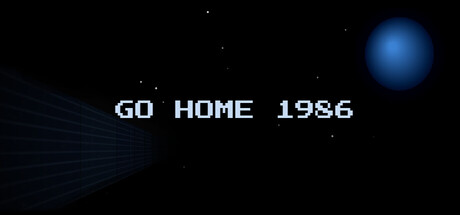
Go Home 1986
Go Home 1986 is a retro first-person maze game focused on navigation, time pressure, and atmosphere. Navigate abstract labyrinths, manage limited tools, and reach the exit before time runs out.
Does this feel indie?
Vote based on whether this game feels indie to you. You can change your vote at any time. Results earn an IGF score after 10 accepted votes.| ContextThe evidence factors used to assess whether this game belongs on IndieGame.Fan. | Status | Notes Latest Contributor: IGF TeamEdit notes |
|---|---|---|
Media
6 itemsAbout the Game
Go Home 1986 is a retro first-person maze game focused on tension, navigation, and atmosphere.
Inspired by the aesthetics and limitations of 1980s PC games, the game places you inside a series of abstract, procedurally generated labyrinths. There is no combat, no map, and no guidance. Only you, the system, and the clock.
Each level must be completed within a strict time limit. Navigation tools exist, but they come at a cost. Using system assistance consumes time, and certain environments interfere with your controls or perception. As you progress, the pressure steadily increases.
The experience is intentionally minimal and impersonal. Sparse 8-bit music and system sounds reinforce the sense of isolation, echoing the cold, mechanical tone of early computer games. The world feels empty and distant.
Tension does not come from enemies, but from disorientation, time pressure, and the subtle feeling of being observed by the system itself.
Go Home 1986 is designed as a short but intense single-player experience, intended to be completed in one or several focused sessions.
Features
First-person maze exploration
Navigate abstract labyrinths with no combat, no enemies, and no hand-holding.Procedurally generated levels
Each run presents new maze layouts across 20 increasingly demanding levels.Strict time pressure
Every level must be completed before the timer runs out. Hesitation is costly.Optional navigation tools with consequences
System assistance exists, but using it consumes valuable time.Environmental interference mechanics
Certain areas alter controls, perception, or movement, increasing disorientation.Minimalist retro presentation
Inspired by the visual and technical limitations of late 1980s PC games.Sparse 8-bit soundtrack and system audio
Sound design reinforces isolation, tension, and mechanical detachment.Score, rank, and full end sequence
Performance is evaluated at the end of the experience.Short, focused single-player experience
Designed to be completed in one or several concentrated sessions.