

Release
March 24, 2020
6 years and 132 days ago
Steam Reviews
Mostly Positive17 reviews76.5%
Does this feel indie?
Vote based on whether this game feels indie to you. You can change your vote at any time. Results earn an IGF score after 10 accepted votes.No votes yet
Game contextLatest: IGF Team
| ContextThe evidence factors used to assess whether this game belongs on IndieGame.Fan. | Status | Notes Latest Contributor: IGF TeamEdit notes |
|---|---|---|
Updated: Jul 14, 2026Developer scaleThe operating scale of the game's developer. | ||
Updated: Jul 14, 2026Publisher scaleThe operating scale of the game's publisher. | ||
Updated: Jul 14, 2026Publisher statusHow the game's publishing relationship is classified. | ||
Updated: Jul 14, 2026Creative controlWho appears to retain creative control of the game. | ||
Updated: Jul 14, 2026Release statusWhether and how the game has been released. |
Media
8 itemsAbout the Game
Free trip to the center of our Milky Way galaxy!
(Index, Rift, and WMR users: we are working on getting this working on your headsets and would appreciate any help as we only have a Vive. We put a discussion our community board about this: )
Done by professional astronomers, this VR experience takes you inside one of their NASA supercomputer simulations to within a few light years of Sagittarius A*, the supermassive black hole lurking at the center of our galaxy. Besides the black hole, the simulation shows one of its important feeding sources: stellar winds that are blown into outer space from stars orbiting the black hole. These stellar winds slam into each other, heating the wind material to temperatures that are so hot -- tens of millions of degrees -- that they glow in X-rays. When viewed from Earth, these same X-rays are detected by telescopes in space, in particular NASA's Chandra X-ray Observatory. The stars and their stellar winds are seen by ground-based telescopes in Chile, among other places, but the only way to get a close up view is to go there yourself in this app!
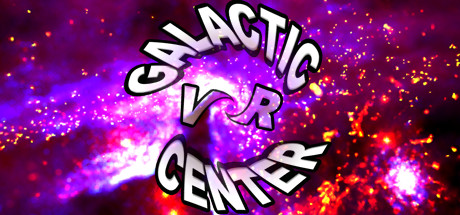
In Galactic Center VR, fly around the few-light-year region around Sagittarius A*, seeing the orbiting stars, their stellar winds, and the X-rays they emit. Or scale down the simulation so everything fits within your VR play area, allowing you to walk around the center of our galaxy. View the whole simulation in stellar winds only, X-rays only, or both, as well as check out the contribution from just one stellar wind at a time. There is also a tutorial explaining more about the simulation, which provides non-astronomers some pertinent background information.
This app was created by astrophysicists at the Instituto de Astrofísica, Pontificia Universidad Católica de Chile, in Santiago.
(Index, Rift, and WMR users: we are working on getting this working on your headsets and would appreciate any help as we only have a Vive. We put a discussion our community board about this: )
Done by professional astronomers, this VR experience takes you inside one of their NASA supercomputer simulations to within a few light years of Sagittarius A*, the supermassive black hole lurking at the center of our galaxy. Besides the black hole, the simulation shows one of its important feeding sources: stellar winds that are blown into outer space from stars orbiting the black hole. These stellar winds slam into each other, heating the wind material to temperatures that are so hot -- tens of millions of degrees -- that they glow in X-rays. When viewed from Earth, these same X-rays are detected by telescopes in space, in particular NASA's Chandra X-ray Observatory. The stars and their stellar winds are seen by ground-based telescopes in Chile, among other places, but the only way to get a close up view is to go there yourself in this app!
In Galactic Center VR, fly around the few-light-year region around Sagittarius A*, seeing the orbiting stars, their stellar winds, and the X-rays they emit. Or scale down the simulation so everything fits within your VR play area, allowing you to walk around the center of our galaxy. View the whole simulation in stellar winds only, X-rays only, or both, as well as check out the contribution from just one stellar wind at a time. There is also a tutorial explaining more about the simulation, which provides non-astronomers some pertinent background information.
This app was created by astrophysicists at the Instituto de Astrofísica, Pontificia Universidad Católica de Chile, in Santiago.