

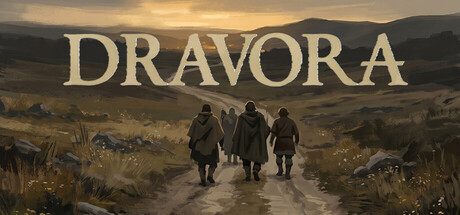
Dravora
A narrative roguelite where you lead desperate people across a fractured dark fantasy continent. No combat screens — every choice is made in words and every consequence follows you. Your companions have their own reasons to leave. How you survive reveals who you are.
Does this feel indie?
Vote based on whether this game feels indie to you. You can change your vote at any time. Results earn an IGF score after 10 accepted votes.| ContextThe evidence factors used to assess whether this game belongs on IndieGame.Fan. | Status | Notes Latest Contributor: IGF TeamEdit notes |
|---|---|---|
Media
5 itemsAbout the Game
The Road Doesn't Care If You Make It
Dravora is a narrative roguelite about leading a party of desperate people across a politically fractured, early medieval continent. There are no combat screens, no stat sheets, no skill trees. Every interaction is a choice made in words — and every choice has consequences that follow you down the road.
Your companions are people, not party members. They joined because your road overlaps with theirs. They have their own values, their own limits, their own reasons for traveling. Push them past those limits and they leave. Protect what they care about and they'll follow you into places they shouldn't.
Who You Are Is What You Choose
There is no character creation screen. No alignment wheel. No morality meter.
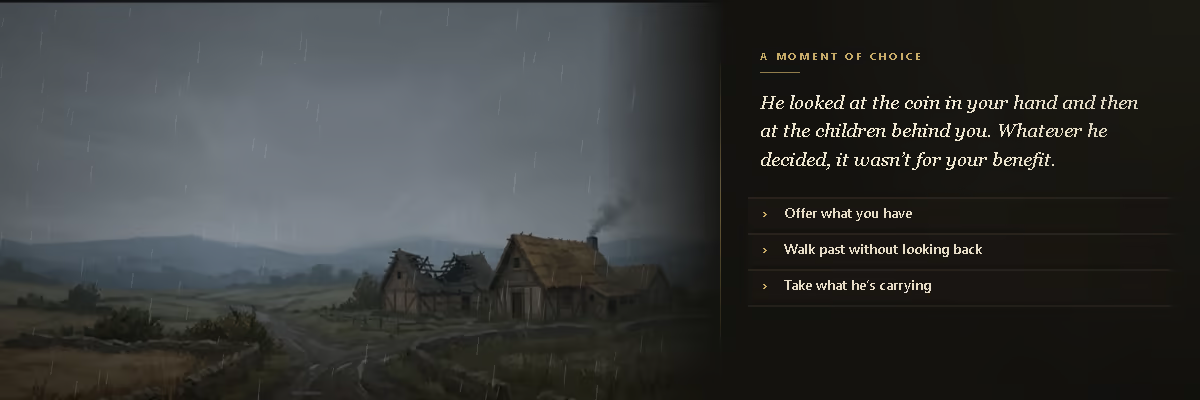
Your character's identity emerges from what you do when the choices are hard and the answers aren't clear. Feed the starving refugees or save the food for your own people. Tell your party the truth about how bad things are or lie to keep morale alive. Face the bandits or find another way around.
Every decision quietly reveals who you were all along — and the world responds to who it sees. Your companions notice. The people you meet notice. By the end, you'll notice too.
Features
Two distinct origins at launch[/b] — each with unique characters, routes, companions, and narrative arcs through the same living world. Different starting points, different stakes, different stories.
Choices that cascade[/b] — a decision at the river crossing echoes three days later when a consequence you didn't expect arrives. The game remembers what you did and builds on it.
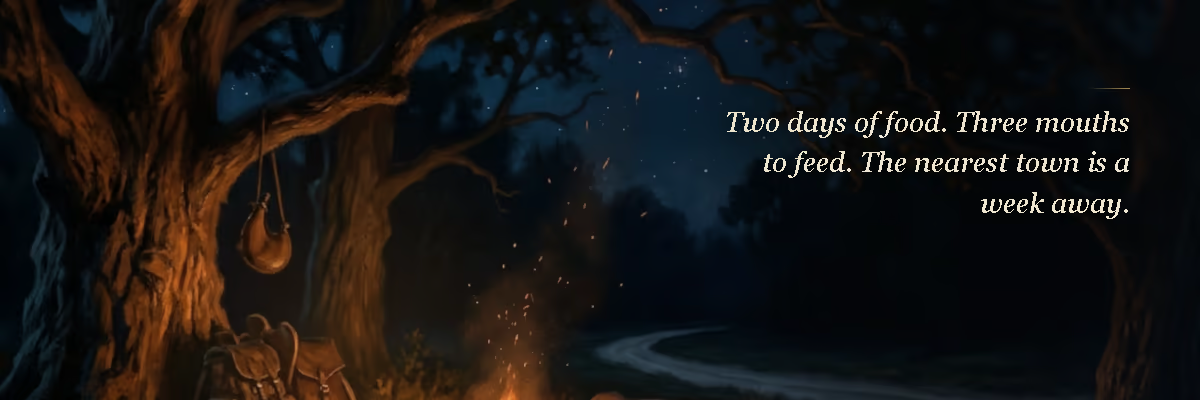
Companions with their own agendas[/b] — they'll challenge your choices, reveal themselves over campfire conversations, and leave if your values diverge too far from theirs. Their departure is a scene, not a notification.
An identity system that watches[/b] — no visible stats. Your personality emerges from accumulated choices and manifests through how the world treats you, what options you see, and what your companions say about you when they think you're not listening.
Survival through scarcity[/b] — food, coin, and supplies. Three numbers. The math is simple. The choices the math forces on you are not.
1.5–3 hour runs with deep replayability[/b] — different choices reveal different people. Different companions change the dynamic. Every run ends with a story worth telling.
No combat minigames[/b] — when violence happens, it's a choice you make and a consequence you live with, not a screen you grind through.
A run epilogue that tells your story[/b] — at the end of every journey, the game writes the narrative of what happened. Who joined. Who left. Who didn't make it. Who you became.
Built By One Person
Dravora is developed by a solo developer using AI-assisted tools for art, code, and narrative drafting. No human artists, writers, or developers were displaced — without these tools, this game would not exist. Every creative decision, every piece of worldbuilding, every design choice is human-made. The tools helped build what one person couldn't build alone.