

ARCANORUM 231
A journey into a mystical underworld and immersive occult art and ritual. Featuring artwork by Barry William Hale, music by NOKO210, and drumming, chanting, and invocations by a number of other practicing occultists.
Developer
Publisher
Release
Coming Soon
Steam Reviews
No reviews yet
Does this feel indie?
Vote based on whether this game feels indie to you. You can change your vote at any time. Results earn an IGF score after 10 accepted votes.No votes yet
Game contextLatest: IGF Team
| ContextThe evidence factors used to assess whether this game belongs on IndieGame.Fan. | Status | Notes Latest Contributor: IGF TeamEdit notes |
|---|---|---|
Media
6 itemsAbout the Game
In 1907, in the midst of a mystical frenzy, the infamous occultist, Aleister Crowley, received a series of arcane sigils. These sigils were said to be the final form of the Major arcana of the Tarot, as witnessed by Osiris in the Egyptian underworld. For each arcana, there are shown two sigils: the upright form of the card, showing the triumph or virtue, called "the house or palace of Tahuti"; and the averse form, showing the down fall or vice, called the "prison of the qliphoth". Each sigil was said to represent a spirit and for each also was a name given, that the spirit might be called.
Crowley published these sigils and names without commentary in 1912 in "The Equinox" vol 1 no 7. Later occultists would summon these spirits and publish records of their workings, these include Kenneth Grant's "Nightside of Eden" in 1977, and Robert Fitzgerald's "A Gathering of Masks" in 2010.
Also inspired by this work, artist Barry William Hale, produced several series of paintings and drawings depicting spirits holding the sigils in wheels. At the commission of Robert Stein, he also produced a series of 22 drawings showing the individual tarot cards featuring the upright and averse spirits joined into one body.
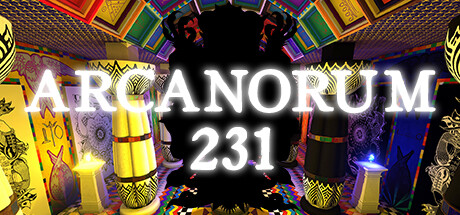
This VR experience is primarily a showcase of Barry's 231 works. It imagines an Egyptian style tomb, wherein the imagery of the Book of the Dead has been replaced with his art. This tomb leads to journey into the underworld, where the participant will be able to enter into 22 temples each featuring one of the 22 drawings and a custom music track by NOKO210. In these temples, the participant can start a ritual featuring the chanting and drumming of real occultists, designed to invoke the spirit of that card.
Crowley published these sigils and names without commentary in 1912 in "The Equinox" vol 1 no 7. Later occultists would summon these spirits and publish records of their workings, these include Kenneth Grant's "Nightside of Eden" in 1977, and Robert Fitzgerald's "A Gathering of Masks" in 2010.
Also inspired by this work, artist Barry William Hale, produced several series of paintings and drawings depicting spirits holding the sigils in wheels. At the commission of Robert Stein, he also produced a series of 22 drawings showing the individual tarot cards featuring the upright and averse spirits joined into one body.
This VR experience is primarily a showcase of Barry's 231 works. It imagines an Egyptian style tomb, wherein the imagery of the Book of the Dead has been replaced with his art. This tomb leads to journey into the underworld, where the participant will be able to enter into 22 temples each featuring one of the 22 drawings and a custom music track by NOKO210. In these temples, the participant can start a ritual featuring the chanting and drumming of real occultists, designed to invoke the spirit of that card.