

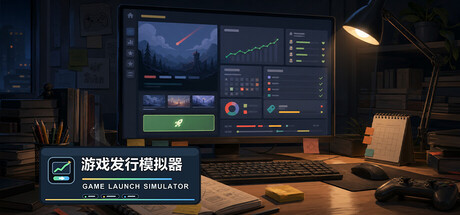
游戏发行模拟器 Game Launch Simulator
GameLaunchSimulator is a text-based management sim about the full journey of publishing an indie game. Build your studio, plan new projects, prepare store pages, grow wishlists, handle reviews, release windows, publishing deals, and post-launch operations, then bring an unknown game to real players.
Does this feel indie?
Vote based on whether this game feels indie to you. You can change your vote at any time. Results earn an IGF score after 10 accepted votes.| ContextThe evidence factors used to assess whether this game belongs on IndieGame.Fan. | Status | Notes Latest Contributor: IGF TeamEdit notes |
|---|---|---|
Media
15 itemsAbout the Game
In Game Launch Simulator, you run a small indie game studio just starting out. The challenge is not only to “finish the game,” but to actually release it: developer registration, project planning, hiring, store page pre-review, approval, launch, discounts, community items, and follow-up marketing all affect your cash flow, wishlists, reputation, and sales.
Choose your game’s genre, theme, core concept, target audience, scope, and technical direction. You can make small casual projects to stabilize your finances, or gradually expand your team and take on mid-sized projects, even near-AAA ambitions. Gameplay, art, narrative, and polish all shape quality, while bugs, budget, team fit, and development time constantly pull against your plans.
Publishing is the heart of the game. Prepare titles, pricing, screenshots, trailers, language support, and store descriptions. Submit store pages for pre-review, watch platform events, sales seasons, festivals, awards, and competing releases. Are your wishlists enough? Should you offer a launch discount? Is it better to wait for the next event window? These choices directly shape your launch results.
You are not alone. Secretary Xia will point out risks and next goals at key moments. Publishers, media, curators, and showcases can bring opportunities, but also revenue shares, requirements, and pressure. When money gets tight, you can take outsourcing jobs for cash. To improve your next game, you can study competitors and build understanding of genres, themes, audiences, and market positioning.
After launch, the work is not over. Schedule discounts, run additional marketing, release community items such as avatar packs, animated wallpapers, badges, and emoticons, and respond to player feedback, localization requests, and long-tail sales changes. First-week sales are only the beginning. A good publisher keeps a game alive after release.
Features
Simulate the full indie game journey from planning, development, store page setup, and review to launch.
Configure titles, pricing, screenshots, trailers, language support, localization, and launch discounts to affect store appeal and wishlist conversion.
Watch a 10-year release calendar and choose launch windows around sales seasons, festivals, awards, and themed events.
Hire staff, upgrade offices, and balance cash flow, progress, quality, and bug risk.
Handle publishers, media, curators, showcases, and outsourcing jobs, then decide which opportunities are worth taking.
Study competitors to build knowledge of genres, themes, core concepts, and target audiences, improving your next release.
Continue operating after launch with discounts, community items, follow-up marketing, and reputation management.
Learn step by step with Secretary Xia, or choose free mode to unlock systems directly.
Making a game is only the beginning. The real challenge is getting it approved, listed, wishlisted, launched, and selling long after release.