

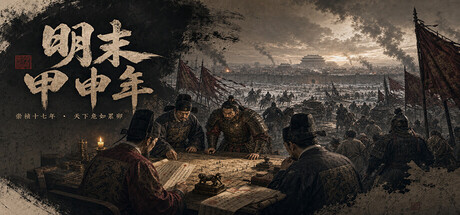
明末:甲申年
Set during the fall of the Ming dynasty in 1644, this historical grand-strategy narrative game lets you rule as the Chongzhen Emperor, fight for the Shun regime, lead another faction, or survive as a commoner. Govern, wage war, manage resources, and reshape history through AI-assisted court debates.
Does this feel indie?
Vote based on whether this game feels indie to you. You can change your vote at any time. Results earn an IGF score after 10 accepted votes.| ContextThe evidence factors used to assess whether this game belongs on IndieGame.Fan. | Status | Notes Latest Contributor: IGF TeamEdit notes |
|---|---|---|
Updated: Jul 14, 2026Developer scaleThe operating scale of the game's developer. | ||
Updated: Jul 14, 2026Publisher scaleThe operating scale of the game's publisher. | A separate publisher is listed without a proven bounded regional or service-only role. | |
Updated: Jul 14, 2026Release statusWhether and how the game has been released. |
Media
6 itemsAbout the Game
1644—the Year of Jiashen. Li Zicheng's armies close in on Beijing while the Qing watch from beyond the passes, and the Ming realm stands on the edge of collapse. At this crossroads of dynastic change, rule as the Chongzhen Emperor and restore order from the brink; join the rebel king and expand the Great Shun; lead another power; or struggle through the upheaval as an ordinary person. This is a historically grounded strategy game whose narrative systems are enhanced by large language models.
The Seventeenth Year of Chongzhen: Can You Rewrite History's Final Chapter?
It is 1644. Li Zicheng has proclaimed the Great Shun in Xi'an. Qing armies wait beyond the frontier, and the Ming realm is battered by crisis. You enter one of the most turbulent turning points in Chinese history, facing rebellion, invasion, famine, fiscal collapse, and court division. Every decision may determine whether a dynasty survives.
Ming: The Year of Jiashen is a text-rich historical grand-strategy game built on detailed research into the final years of the Ming. Its map spans the Two Capitals and Thirteen Provinces, together with the powers of East Asia. Allocate grain and military pay, appoint or dismiss officials, issue imperial edicts, and contend with ministers in court. Preserve the Grand Secretariat and its traditional drafting procedures, abolish it in favor of direct imperial rule, or pursue an entirely different political settlement—the state will evolve around your choices.
Government, military command, economic management, and diplomacy form the core of play. Respond to military dispatches, natural disasters, popular unrest, and long-running political crises. Read the court gazette to follow events across the realm, and debate policy with AI-assisted advisers whose responses reflect the current campaign. Great Shun's eastern advance, the Qing invasion, Jiangnan's gentry, and the military houses of Liaodong all compete within a changing historical system.
Your decisions are recorded, carried forward, and reflected in diverging historical outcomes.
Multiple perspectives let you plan from the throne or experience the upheaval from farms, streets, and marketplaces as a commoner. A broad technology tree, detailed resource and trade systems, dynamic situations, and historically researched characters and geography create a late-Ming world with both historical weight and strategic depth.
History Offers No Second Chances. This Game Does.
The spring of 1644 has arrived. Can the Ming survive this time?
Key Features
- A researched portrayal of East Asia's political landscape in and around 1644
- Court politics shaped by the Grand Secretariat, direct imperial rule, and alternative political paths
- AI-assisted court debates, advisers, memorials, and narrative responses
- Multi-province resource management, taxation, military pay, logistics, and trade
- Dynamic crises involving famine, rebellion, military governors, gentry interests, and frontier war
- Branching historical outcomes that remember and react to your decisions
- A commoner mode focused on individual lives beneath dynastic upheaval
- Earlier starting scenarios, including 1627, for campaigns beyond the final crisis of 1644