

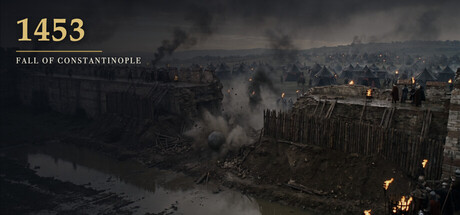
1453: Fall of Constantinople
Constantinople, 1453. Four witnesses — a janissary, a baker's daughter, an engineer, a noble — live the same 53 days of the siege. Choices cross between their stories, and the city remembers. An illustrated, choice-driven historical novel where every ending is someone's truth.
Developer
Publisher
Release
Coming Soon
Steam Reviews
No reviews yet
Does this feel indie?
Vote based on whether this game feels indie to you. You can change your vote at any time. Results earn an IGF score after 10 accepted votes.No votes yet
Game contextLatest: IGF Team
| ContextThe evidence factors used to assess whether this game belongs on IndieGame.Fan. | Status | Notes Latest Contributor: IGF TeamEdit notes |
|---|---|---|
Media
6 itemsAbout the Game
Everyone knows the city will fall. No one knows who they'll be that day.
Venice, 1500. Anna Notaras — daughter of Byzantium's last great duke, who left before the end and spent fifty years ransoming its survivors — is writing down testimonies of the siege. Four witnesses sit at her table. Their accounts don't always agree. She writes them down anyway.1453: Fall of Constantinople is a choice-driven, illustrated historical novel about the fifty-three days that changed a city's fate — told from both sides of the walls, in four interlocking stories.
Four testimonies, one clock
- The Janissary — born Greek, taken as a boy, now besieging the city his grandmother prayed toward.
- The Baker's Daughter — running the ovens, the queues, and the rumors of the Petrion quarter as the bread runs out.
- The Engineer — a foreign specialist fighting the underground war of tunnels, water bowls, and burning towers.
- The Noble — carrying the emperor's secret census, hearing the surrender embassies, guarding the hidden gold.
The city remembers
Your choices cross between testimonies. Mercy shown in one story becomes a sixth ending in another; a bribe paid at court becomes the boat a girl might board on the last morning. One city, one clock, interlocking fates.What the sources say
After every chapter, the game shows its cards: is this scene in an eyewitness diary, a later chronicle — or a legend born centuries after? The fall of Constantinople is told through contested sources, and honesty about them is a feature, not a footnote.What's inside
- Four deep routes with 5–6 distinct endings each, plus a frame story that binds them.
- Cross-story memory — completed testimonies visibly change scenes, choices, and endings in the others.
- A living visual world — over a hundred painted-realism illustrations and ambient motion vignettes.
- An adaptive score moving between mehter rhythm and Byzantine chant as the walls and the days wear down.
- The sources codex — every major event flagged: attested, rumor, legend, or disputed.
- Both sides, fully human — Ottoman and Byzantine lives written with equal care; no side's ending is the "true" one.
1453's narrative text is human–AI co-written and human-edited under the author's direction. The game's illustrations and short ambient clips are pre-generated with AI image tools under human art direction and historical review — nothing is generated while you play. Music is composed with AI assistance under the author's direction.